
Cat Fountain: Keep Your Cat Hydrated & Healthy
A cat fountain helps keep your cat hydrated by encouraging consistent water intake through moving, filtered water that many cats naturally prefer. Cats often drink less from stagnant bowls, which can contribute to dehydration over time. A cat water fountain provides fresh, circulating water that appeals to your cat’s instincts and supports overall health. Many pet owners notice their cats drink more frequently once they introduce water fountains for cats into the home. That simple change can make a meaningful difference in daily hydration habits.
Cats evolved from desert-dwelling ancestors, so they do not always have a strong thirst drive. In many households, this means cats may not drink enough water on their own. Veterinarians often see the impact of low water intake during routine exams. Tools like a cat fountain help support better hydration in a practical, stress-free way. Understanding how these fountains work and why they matter can help you make informed choices for your cat’s care.
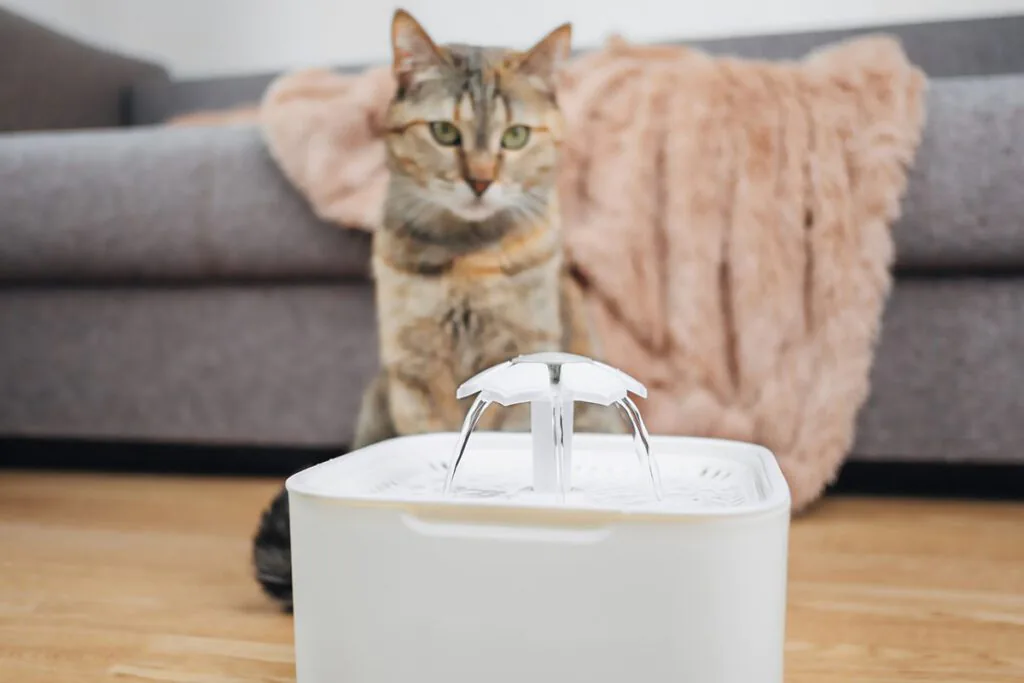
Benefits of Using a Cat Fountain
A cat fountain offers more than just a steady supply of water. It creates an environment that encourages healthy drinking habits while supporting multiple aspects of your cat’s well-being. Many cats respond positively to the sound and movement of flowing water, which can make hydration feel more natural.
- Encourages increased water intake, which supports kidney and urinary tract health
- Provides continuous filtration to remove debris, hair, and impurities
- Keeps water fresher compared to stagnant bowls
- Appeals to a cat’s natural preference for moving water
- Reduces the frequency of manual refills in many cases
In our experience, cats that use a cat water fountain often develop more consistent drinking routines. That consistency matters, especially for cats prone to urinary concerns or those eating primarily dry diets. Water fountains for cats create a simple, reliable way to support hydration without adding stress to your cat’s daily routine.
How Cat Fountains Encourage Hydration
Cats respond to subtle environmental cues, and moving water triggers curiosity and engagement. A cat fountain uses gentle circulation to create ripples or streams that attract your cat’s attention. This movement can prompt more frequent visits to the water source throughout the day.
The filtration system also plays an important role. Many cat water fountain designs include carbon or foam filters that improve taste and remove odors. When water tastes fresh, cats are more likely to drink. This becomes especially helpful in multi-pet households where water bowls can quickly accumulate debris.
Placement also influences hydration habits. Position water fountains for cats in quiet, accessible areas away from litter boxes and food bowls. Cats prefer separation between eating, drinking, and elimination spaces. A thoughtfully placed cat fountain can increase usage and make hydration part of your cat’s natural routine.
Types of Cat Fountains Available
Not all cat fountains function the same way. Understanding the different designs can help you select one that fits your cat’s preferences and your home environment. Each style offers unique advantages depending on your priorities.
Ceramic Cat Fountains
Ceramic options provide a sturdy, non-porous surface that resists bacteria buildup. These cat fountains often feel more stable, which benefits cautious or senior cats. Many designs also offer a quieter operation, making them a good fit for noise-sensitive pets.
Stainless Steel Cat Fountains
Stainless steel models offer durability and easy cleaning. They resist scratches and help maintain water purity over time. Many veterinary professionals favor stainless steel cat water fountain options because they combine hygiene with long-term reliability.
Plastic Cat Fountains
Plastic fountains remain a popular and budget-friendly option. They come in a wide range of shapes and sizes, including multi-tier designs. Regular cleaning becomes especially important with plastic models to prevent buildup.
Multi-Stream and Gravity Designs
Some water fountains for cats feature multiple streams or cascading levels. Others use gravity-fed systems to maintain consistent water levels. Cats may show strong preferences for certain flow styles, so observing your cat’s behavior can guide your choice.
Cleaning and Maintenance Tips
A clean cat fountain ensures your cat continues to drink comfortably and safely. Regular maintenance also extends the life of the unit and keeps the filtration system working effectively. Pet owners should build cleaning into their weekly routine.
- Rinse and refill the fountain with fresh water daily
- Disassemble and clean all components at least once per week
- Replace filters based on manufacturer guidelines
- Check for buildup or residue in pump areas
- Use pet-safe cleaning practices when washing parts
Consistency matters when maintaining a cat water fountain. Even the best design cannot function properly without regular care. If you notice reduced water flow or unusual noise, cleaning the pump and components often resolves the issue. Staying proactive helps ensure your cat continues to benefit from clean, appealing water.
Choosing the Right Cat Fountain for Your Pet
Selecting the right cat fountain involves more than appearance. Your cat’s personality, household setup, and daily routine all play a role. Veterinarians guide many pet owners through this decision during wellness visits, especially when hydration becomes a concern.
Start by considering your cat’s comfort level with sound and movement. Some cats prefer gentle bubbling, while others enjoy a steady stream. Size also matters. Multi-cat homes often benefit from larger water fountains for cats with higher capacity.
Material choice can impact both hygiene and durability. Stainless steel and ceramic options often provide long-term value, while plastic models offer flexibility in design. Ease of cleaning should remain a top priority, since consistent maintenance supports better outcomes.
Power source and placement also influence usability. Most cat water fountain models require a nearby outlet, so plan placement accordingly. Choose a location that feels safe and accessible to your cat while minimizing disruption from household activity.
When to Talk to Your Veterinarian About Hydration
Changes in drinking habits can signal underlying health concerns. While a cat fountain can encourage hydration, it does not replace veterinary evaluation when something seems off. Monitor your cat’s behavior and note any changes.
Signs that may warrant a veterinary visit include:
- Drinking significantly more or less than usual
- Changes in appetite or weight
- Increased urination or litter box changes
- Lethargy or decreased activity
- Vomiting or other unusual symptoms
Hydration connects closely with kidney function, urinary health, and overall wellness. Early evaluation allows us to identify concerns and recommend appropriate next steps. A cat water fountain can support daily hydration, but ongoing monitoring remains essential.
Support Your Cat’s Health with Better Hydration
If you have questions about your cat’s hydration or want guidance on choosing the right cat fountain, our team at Veterinary Village in Plymouth Meeting, PA, is here to help. Call (484) 820-1700 or request an appointment online to discuss your cat’s needs with our veterinary team.
Recent Posts

About Veterinary Village
Veterinary Village offers excellent service to clients in a comfortable, friendly atmosphere. To learn more about us and how we can better serve you and your pet here in Plymouth Meeting, PA, click the button below.
Share This Post
Recent Posts
About Veterinary Village
Veterinary Village is a network of three animal hospitals based in Atlanta, GA and the surrounding area. We offer honest, excellent service to our clients in a comfortable, friendly atmosphere. To learn more about our locations and how we can better serve you and your pet, click the button below.